Linea Tower
Design Narrative
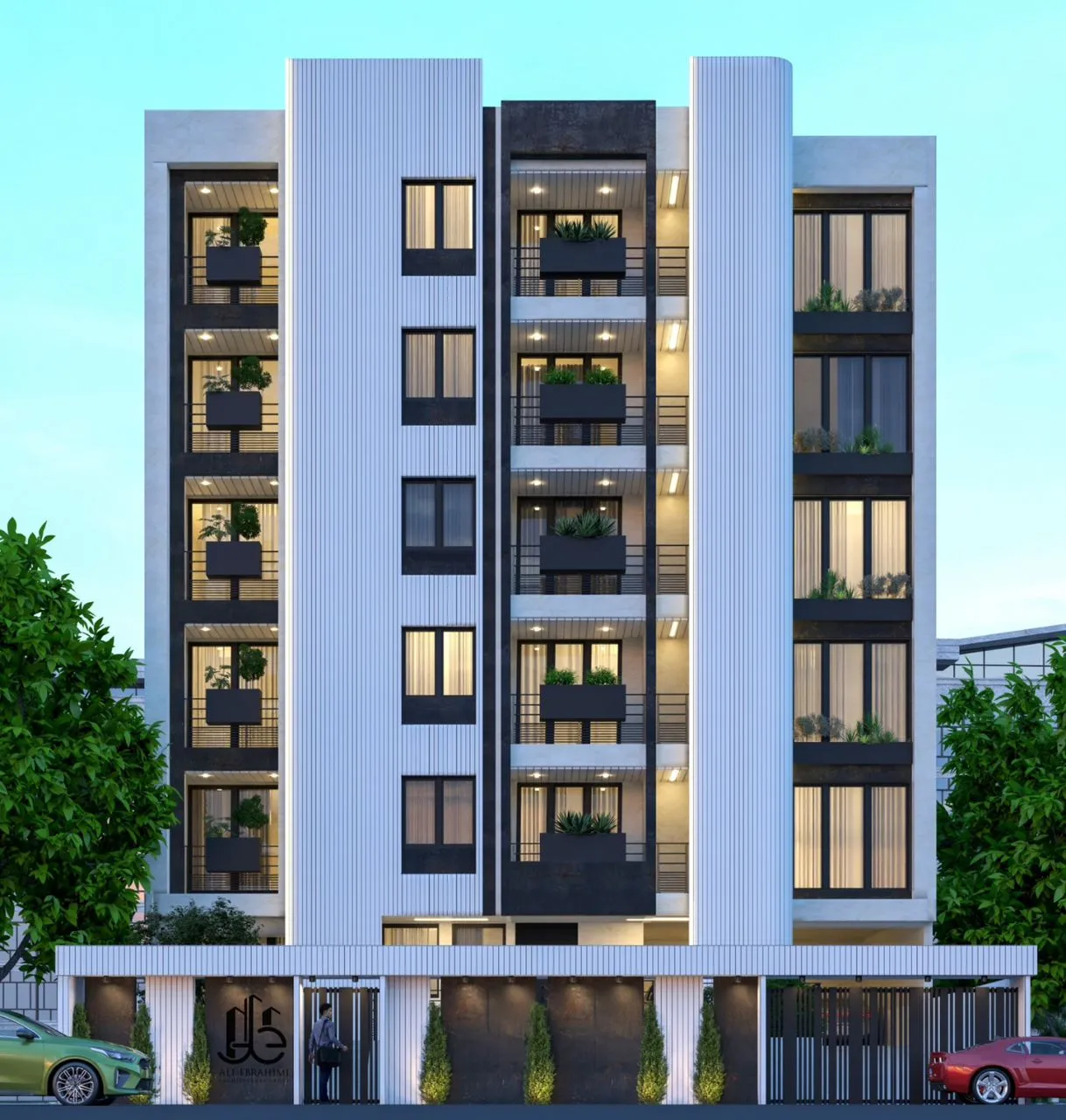
The design of Linea Tower began with a core architectural question: How can a narrow urban facade achieve depth, identity, and visual rhythm without relying on excessive ornamentation?
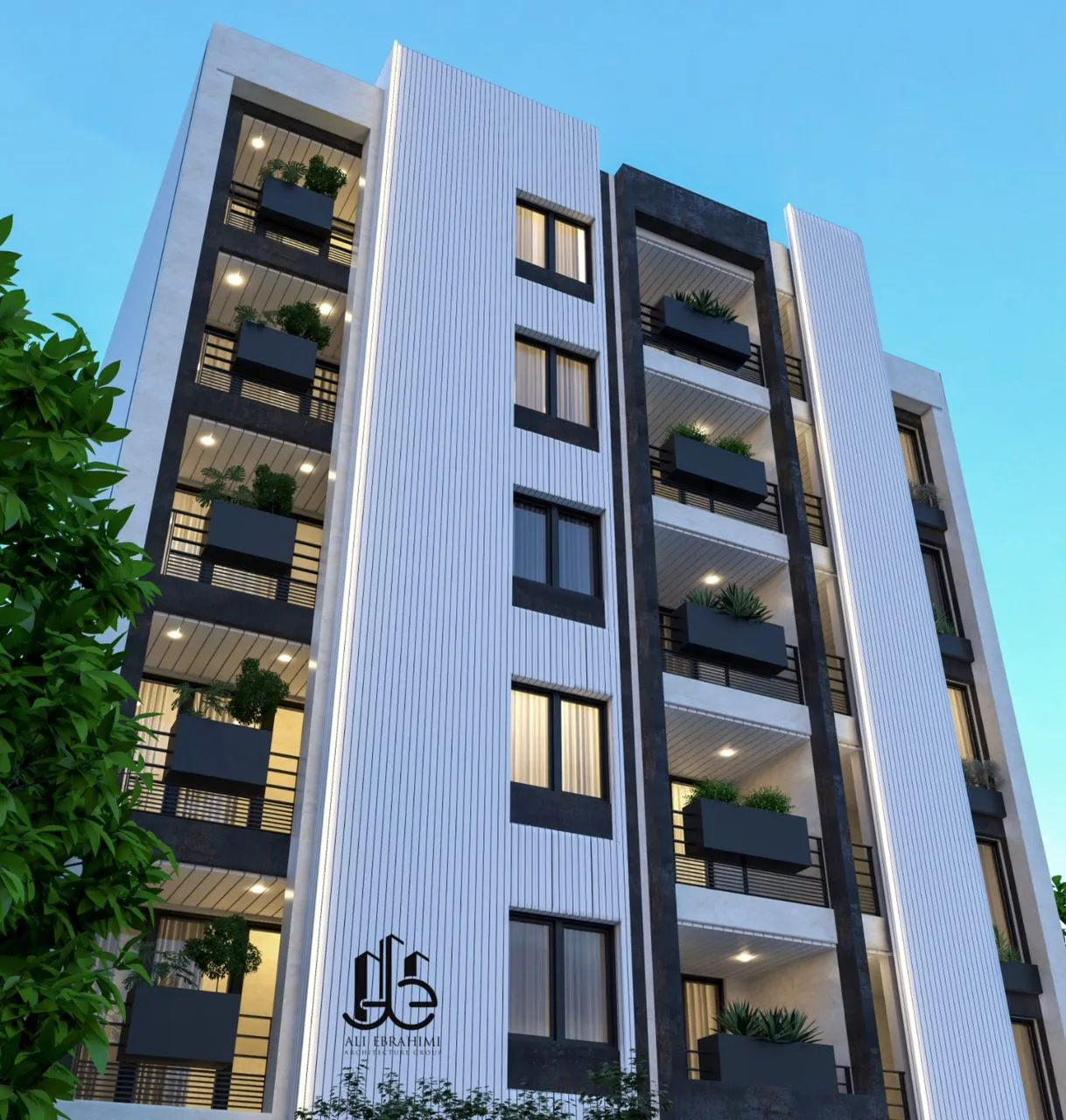
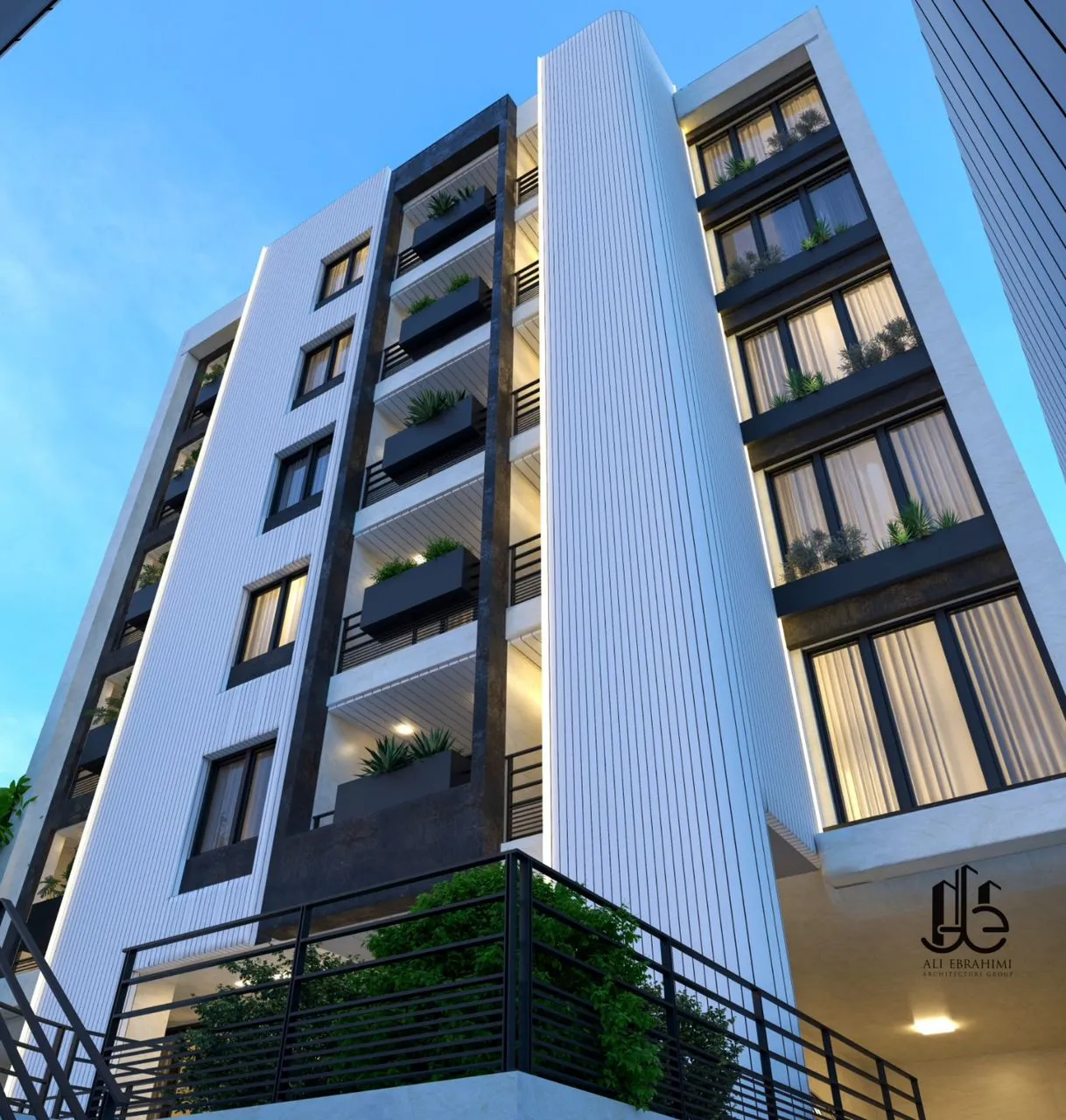
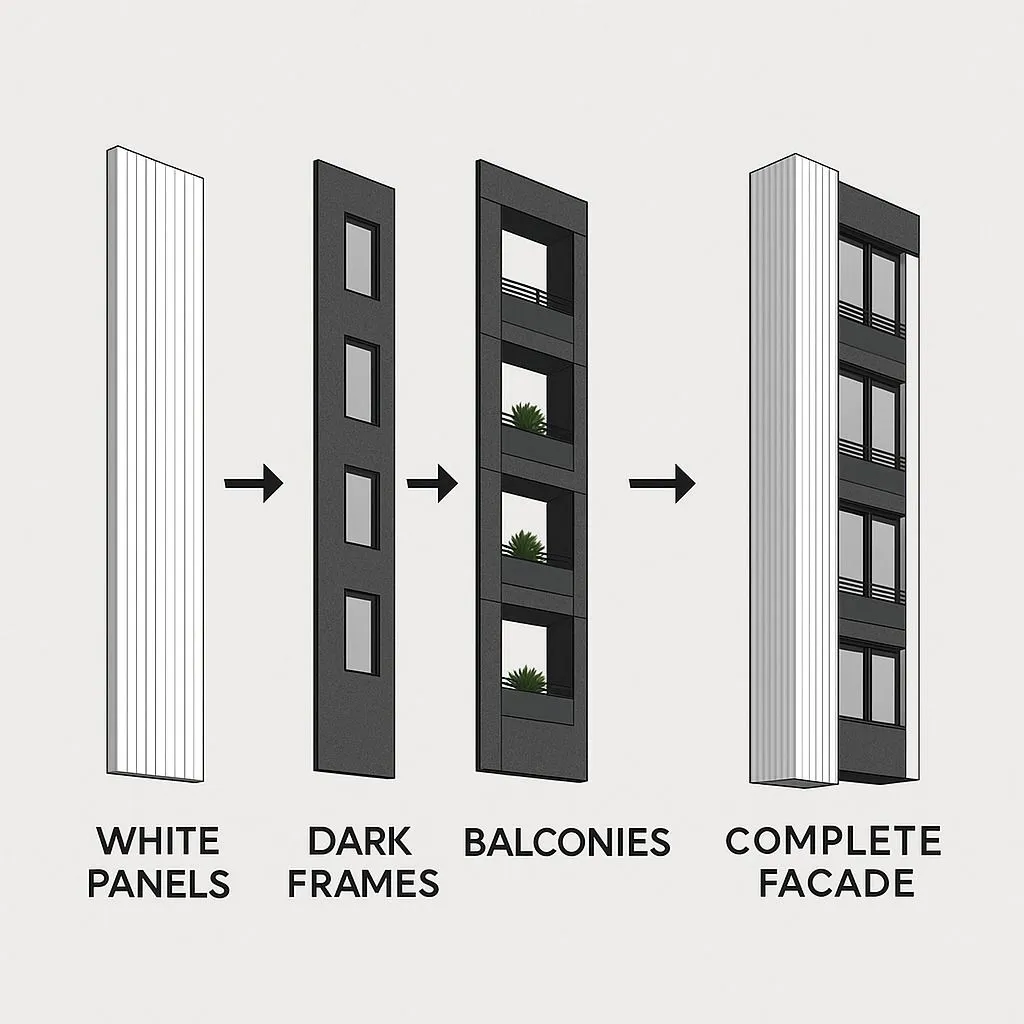
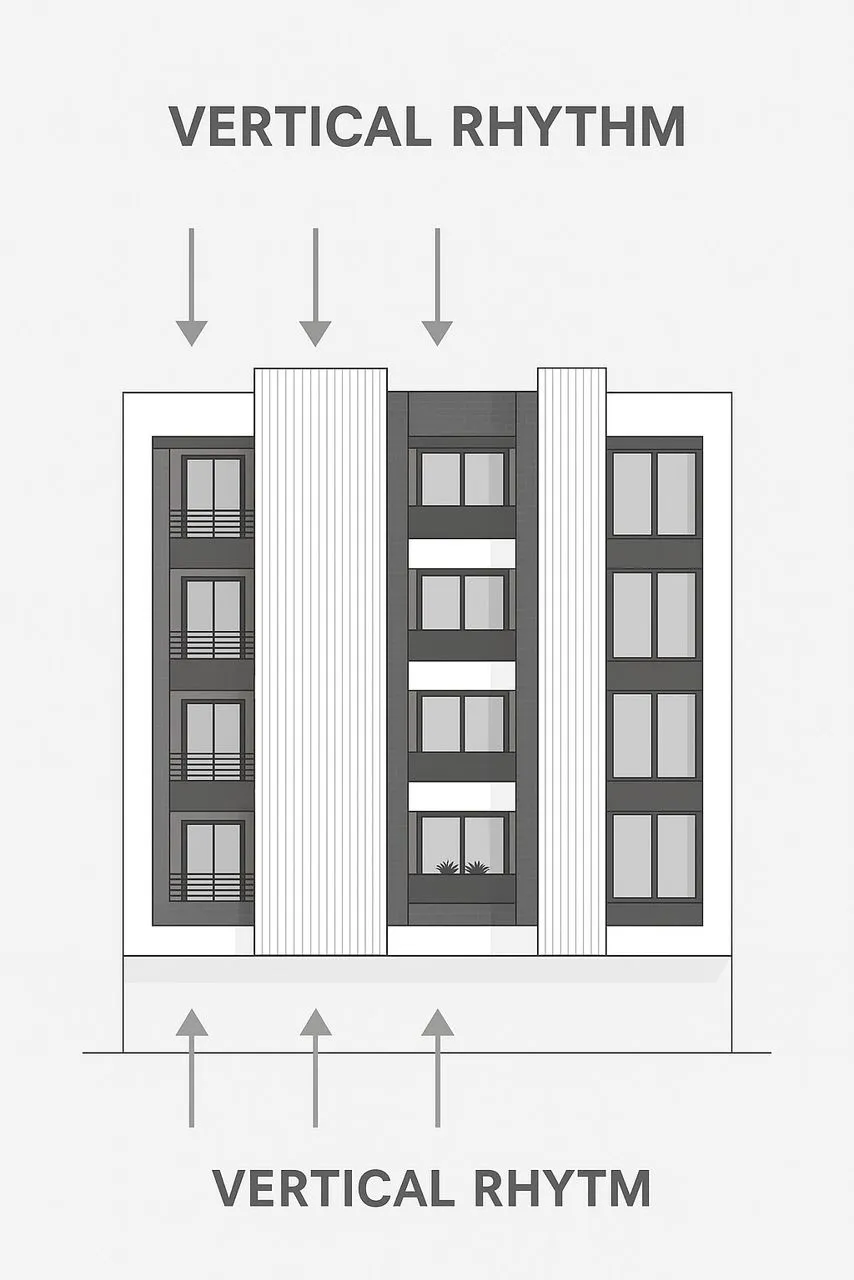
The solution emerged through a system of vertical layers, consisting of three independent planes working in harmony:
- Deep, shaded balconies forming the active core,
- Dark structural frames adding visual weight and contrast,
- White rib-like panels establishing a strong vertical signature.
This tri-layer composition creates expressive depth while remaining fully feasible within Shiraz’s urban fabric.
Light as a Key Design Element
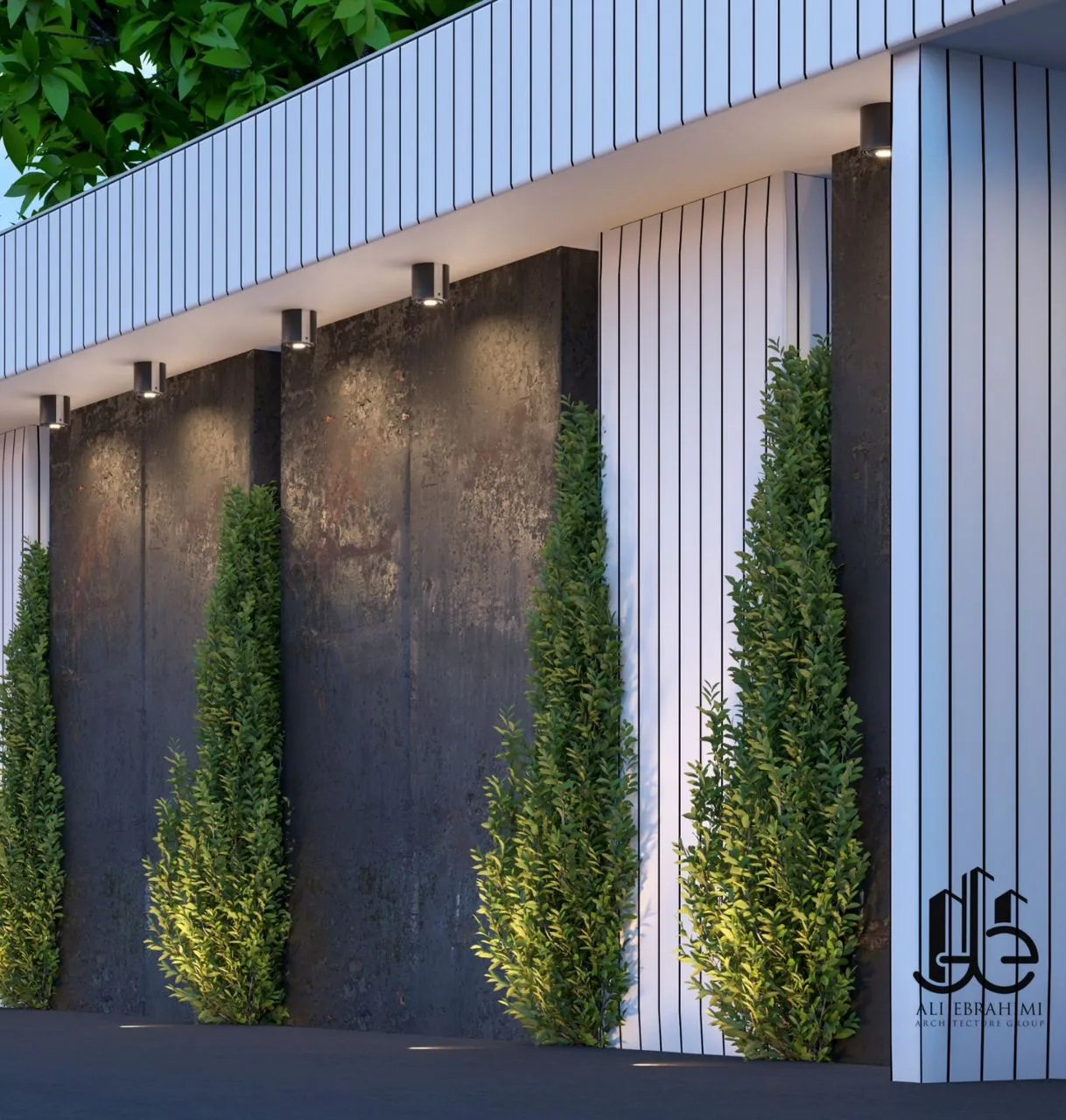
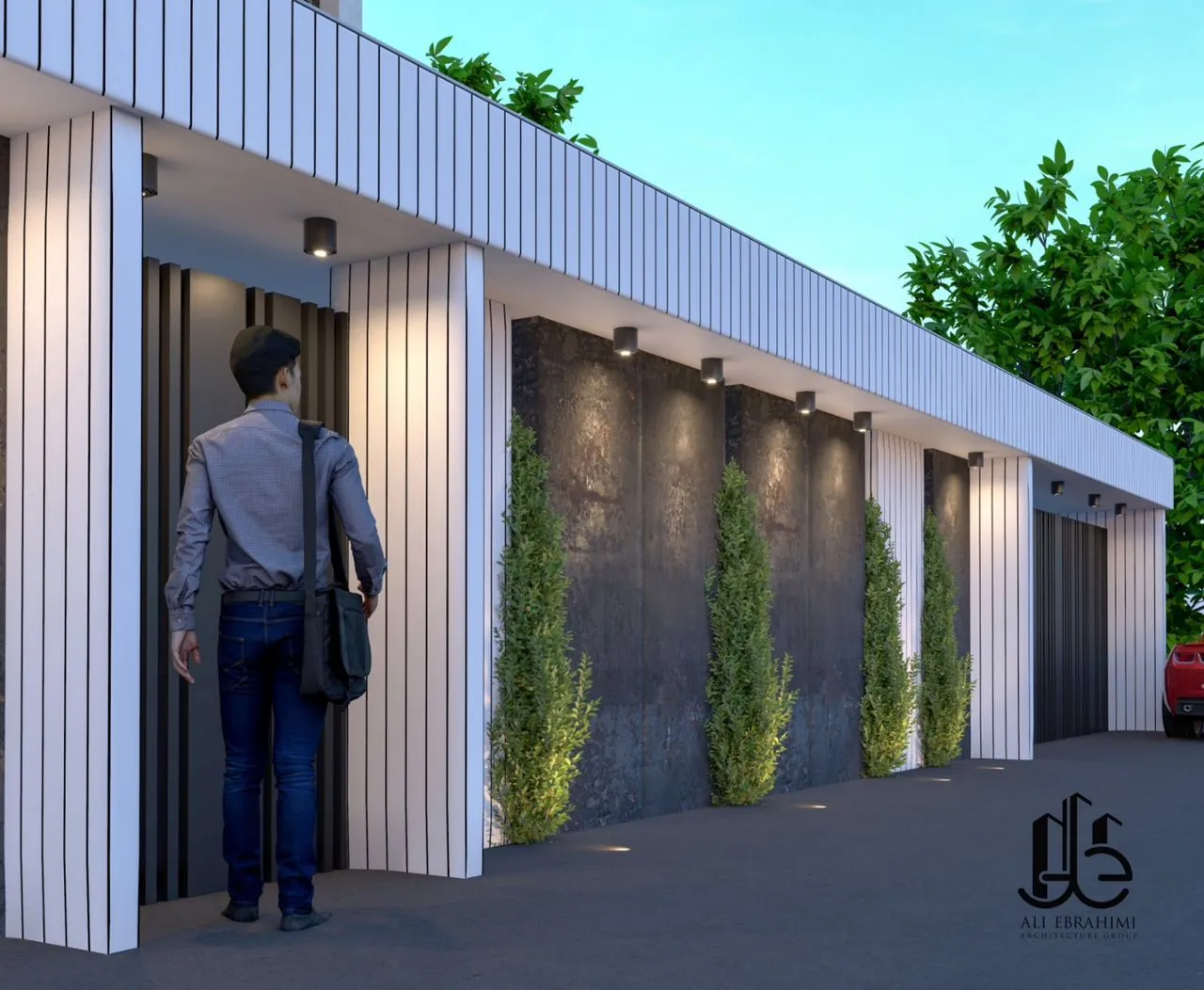
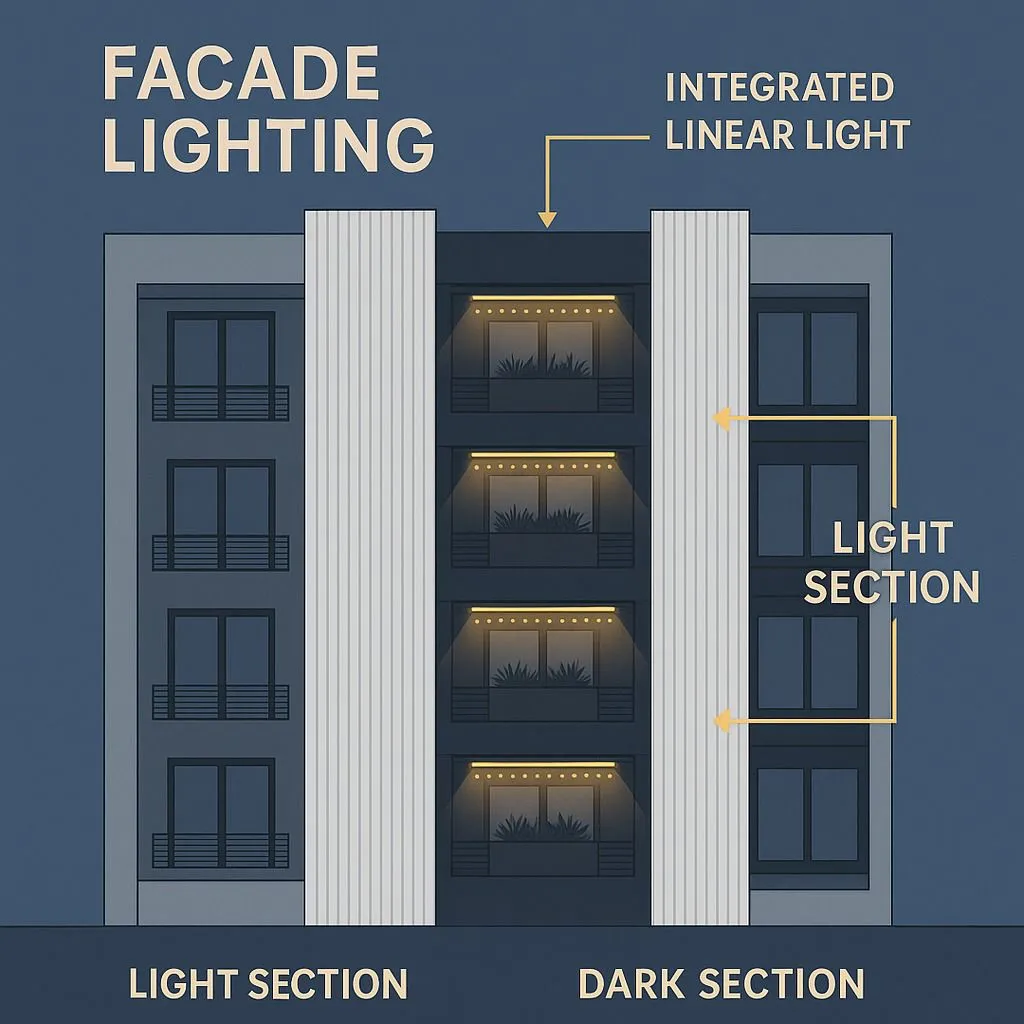
Light plays a critical role in vertical-line residential architecture. Integrated linear LED lighting highlights the geometry of the white panels at night, transforming the facade into a luminous vertical sculpture. The entrance level features a controlled play of shadow, natural textures, and greenery, providing a human-scale experience that connects with residents and visitors.
Buildability & Material Details
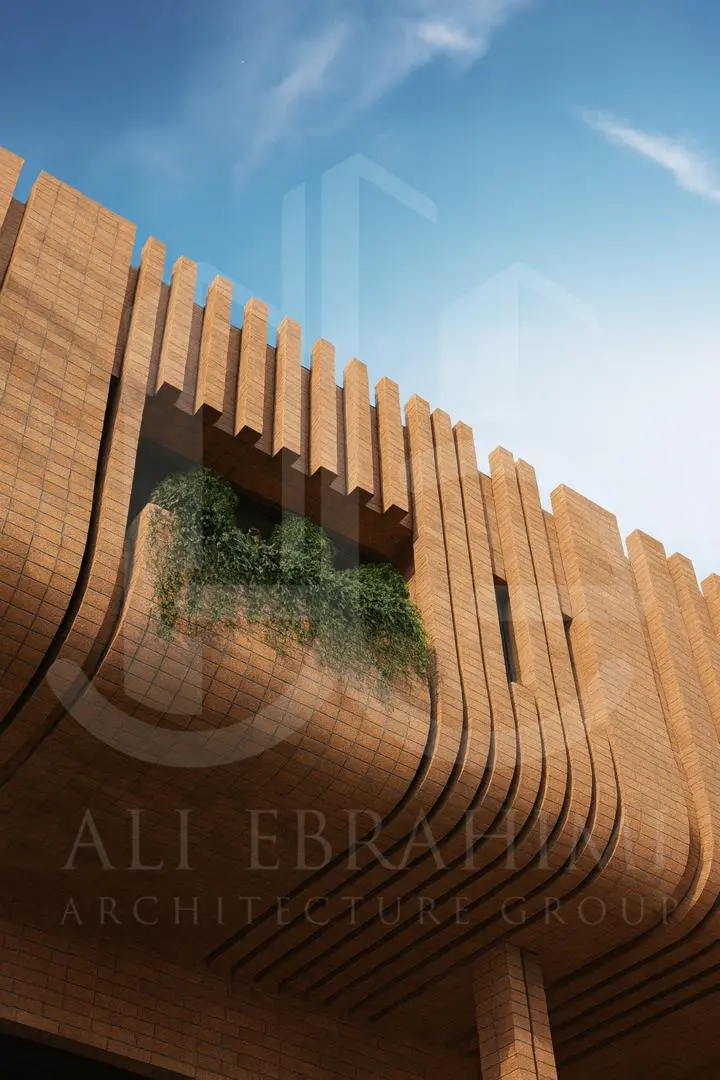
The residential facade was designed with construction feasibility in mind. Vertical panels follow a modular system for rapid installation and precise shadow lines. Dark structural elements utilize ceramic or stone slabs with minimal joints, while balcony ceilings integrate lighting channels for a seamless and high-quality appearance.
Climate Analysis & Human-Centered Design
Following the Mind-Coded Design philosophy, every element is designed to shape human perception, emotion, and behavior. Vertical rhythms direct visual focus upward, entrance spaces compress then release, and lighting ensures a calm transition from public to private areas. Human-centered design principles guide every architectural decision.
Final Outcome
Linea Tower represents a sophisticated approach to urban residential architecture in Shiraz, combining clarity, rhythm, and material precision to produce a timeless facade. It exemplifies Ali Ebrahimi’s contemporary residential design language and demonstrates how modern urban architecture can balance functionality, identity, and a human-centered experience.